
What to Know Before Moving to Eagle Mountain, UT
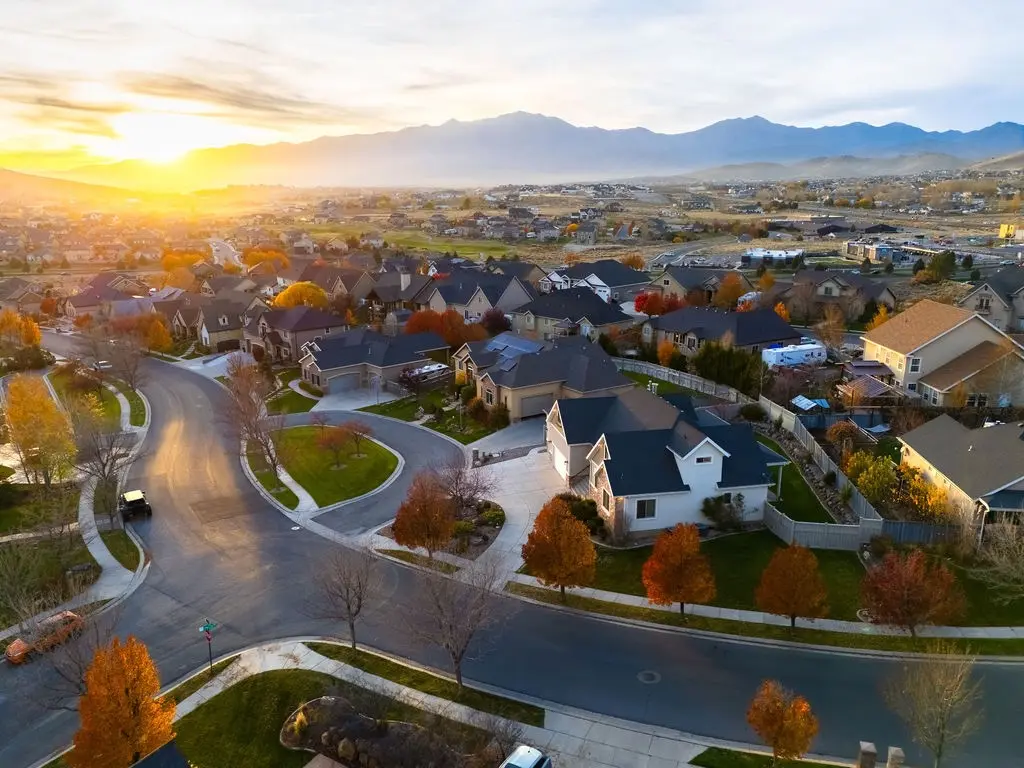
EAGLE MOUNTAIN, UTAH GUIDE
What Should I Know Before Moving to Eagle Mountain, UT?
By Mike Anderson | utah.search.homes | Updated May 2026
Everything you need to consider before making the move: Housing, schools, commute, community, and what locals wish they'd known first.
Eagle Mountain has quietly become one of Utah's most talked-about places to live. It offers stunning desert mountain scenery, family-friendly neighborhoods, and home prices that are still reasonable by Wasatch Front standards. But it's also a city that rewards buyers who go in with their eyes open. Here's what you genuinely need to know before you commit.
01 — CONTEXT
Eagle Mountain is one of the fastest-growing cities in Utah
Incorporated in 1996 with just a few hundred residents, Eagle Mountain has exploded into a city of nearly 77,000 people as of early 2026 — making it one of the fastest-growing municipalities in the entire state. That growth isn't slowing down.
New master-planned communities like Firefly and Oquirrh Mountain Ranch are adding thousands of homes and bringing in new commercial development alongside them. This is important context whether you're buying your forever home or thinking about long-term investment value.
By the numbers:
- 76,695 estimated residents as of January 2026
- 88% of housing units are owner-occupied
- Projected to become Utah's largest city by 2050
What this means for buyers: Early movers in developing areas often see the strongest appreciation. The tradeoff is that some infrastructure — retail, roads, services — is still catching up to the population.
02 — HOUSING MARKET
The housing market is active — and buyers need to move quickly
Eagle Mountain's median home value sits around $470,000–$480,000, with newer construction in master-planned communities typically in the mid-$500s to low $600s. Compared to nearby cities like Lehi or Saratoga Springs, Eagle Mountain remains one of the more affordable options on the Wasatch Front.
That affordability draws strong demand. The market moves quickly: inventory turns over fast, and well-priced homes in desirable neighborhoods attract multiple offers. If you're planning to buy here, being pre-approved and working with someone who knows the area well isn't just helpful — it's the difference between getting a home and watching it go under contract before you get a showing.
Two main areas to understand: Eagle Mountain divides into two primary zones — the Ranches (closer to I-15 and American Fork, more established) and City Center (farther in, more growth-stage infrastructure). Prices, commute times, and amenity access differ meaningfully between them.
Key things to know:
- Get pre-approved before you start touring — this market doesn't wait
- Property taxes are notably low, typically $800–$1,500 annually
- New construction is available and expanding — worth comparing to resale
- Rental inventory is limited; owner-occupied rates are very high (~88%)
- Rental prices run relatively high, making buying more cost-effective for most
03 — COMMUTE & LOCATION
The commute is real — plan for it before you fall in love with a house
Eagle Mountain sits west of Utah Lake, positioned slightly off the main I-15 corridor. That distance translates to meaningful commute times that vary significantly depending on which neighborhood you're in and where you work.
From the Ranches area, you're looking at roughly 15–20 minutes to American Fork and the freeway. From City Center, plan for 25–30 minutes just to reach the highway. Salt Lake City is about 45 minutes in light traffic, and Provo/Orem is around 35 minutes — though both can stretch considerably during peak hours.
The road situation matters: Eagle Mountain currently has limited road egress — essentially three routes out of the city, each with two lanes. During rush hour, those roads can back up significantly. The Pony Express Highway and Mountain View Corridor improvements have helped, but this is a real quality-of-life consideration for anyone commuting daily. Remote and hybrid workers will find Eagle Mountain a much easier fit.
The city has no significant public transit connection, so plan on driving. If your job requires in-office presence in Salt Lake or Lehi during peak hours, honestly evaluate what that daily commute looks like — and budget your time accordingly.
04 — SCHOOLS
Schools are improving, with some standout options — but do your research by neighborhood
Eagle Mountain schools fall within the Alpine School District. Academic performance varies by school. District-wide reading proficiency is around 44% (slightly above the Utah average) while math proficiency sits near 38%.
The top-ranked schools include Ranches Academy, Hidden Hollow School, and Black Ridge School. For families who want alternatives, there are notable tuition-free charter options:
- Ranches Academy (K–6): Community-focused charter emphasizing core values and parent involvement
- Rockwell Charter School (7–12): ~98% graduation rate, smaller class sizes, arts and CTE emphasis
- Cedar Valley High School: The main public high school serving Eagle Mountain families
Important for families: School quality genuinely varies by neighborhood in Eagle Mountain. Before you commit to a specific home, verify which school it feeds into and look at performance data. It's worth a conversation with a local agent who can map it out for you.
05 — LIFESTYLE
Outdoor recreation is exceptional — amenities are growing but still catching up
If you love being outdoors, Eagle Mountain is genuinely hard to beat at this price point. The city has over 30 parks, 262+ miles of bike and hiking trails, and the iconic Five Mile Pass OHV area for off-road enthusiasts. Utah Lake is nearby, and access to world-class skiing throughout the Wasatch is reasonable on weekends.
Day-to-day amenities are expanding steadily. You'll find gas stations, local restaurants, banks, dentists, doctors, and urgent care within the city — enough for most daily needs. Major grocery and big-box retail typically means a trip to American Fork or Lehi, though that's improving as commercial development follows residential growth.
Community feel is real: Eagle Mountain has a genuine small-town community spirit — low crime, neighbors who know each other, strong family orientation, and a young, energetic demographic. The median household income is around $105,000 and the poverty rate is low at 4%.
One additional note: Eagle Mountain's desert location adjacent to dry, undeveloped land creates seasonal wildfire exposure during summer months. It's worth understanding your neighborhood's evacuation routes and ensuring your homeowner's insurance reflects the regional context.
06 — SUMMARY
The honest pros and cons — so you can decide with clear eyes
WHY PEOPLE LOVE IT
- More affordable than most Wasatch Front options
- Low crime, strong community feel
- Exceptional outdoor recreation access
- High homeownership rates and stable neighborhoods
- Significant long-term growth and appreciation potential
- Low property taxes ($800–$1,500/year)
- Young, family-oriented demographic
WHAT TO PLAN AROUND
- Real commute times, especially at peak hours
- Limited road egress from the city
- No public transit connections
- Amenities still growing — some trips to neighboring cities
- School quality varies by neighborhood
- Seasonal wildfire exposure
- Fast-moving market requires preparation
For remote workers, families who prioritize space and outdoor lifestyle, and buyers who want to get into a growing market at a reasonable price — Eagle Mountain is a compelling choice. For someone who needs daily convenience and a short commute to Salt Lake, weigh the tradeoffs carefully before committing.
Thinking about making the move?
I help buyers navigate Eagle Mountain's market neighborhood by neighborhood, from school zones and commute tradeoffs to finding homes before they hit the open market.
Search Eagle Mountain homes at utah.search.homes or reach out directly to get started.
Categories
- All Blogs (62)
- Alpine, Utah (4)
- Cedar Hills, Utah (4)
- Eagle Mountain, UT (17)
- Lehi Utah (7)
- Lindon, Utah (4)
- Mortgage Lending (3)
- Open House (1)
- Orem, Utah (9)
- Pleasant Grove, Utah (4)
- Provo, UT (5)
- Salem, Utah (2)
- Saratoga Springs, UT (12)
- Springville, Utah (2)
- Traverse Mountain (4)
- Utah Valley Real Estate (36)
- Vineyard, Utah (5)
Recent Posts





GET MORE INFORMATION